Why the Gearbox Matters as Much as the Engine
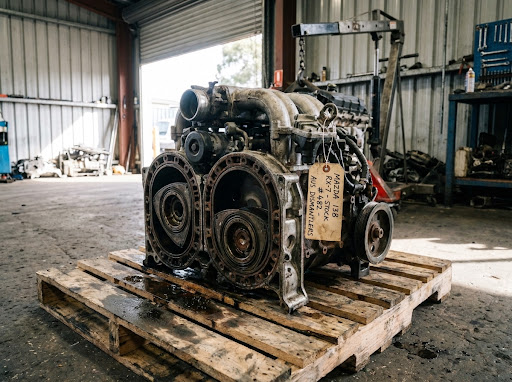
When you spend time around rotary-powered Mazdas, the engine gets most of the attention. The unique hum and the high-revving character of the 1.3- and 1.5-litre twin-rotor designs tend to dominate conversations at meets and in online forums. But anyone who has actually kept an RX-7 or RX-8 on the road for more than a few years knows that the gearbox is just as critical. A worn synchromesh, a chipped tooth on a pinion, or a failing bearing can sideline a car faster than a blown apex seal. That is why sourcing sound Mazda gearbox parts has become a practical concern for owners in Australia and beyond.
I have spent a fair amount of time under old Mazdas in Melbourne, and I have seen what happens when people overlook the transmission. A beautiful, freshly rebuilt rotary engine paired with a sloppy gearbox is a recipe for frustration. The car might sound incredible at idle, but the moment you try to shift into second gear under load, the whole experience falls apart. The lesson is simple: treat the gearbox as a first-class component, not an afterthought.
Understanding the Common Mazda Transmissions
Mazda used several different gearbox families across its rotary-powered lineup. The most familiar to enthusiasts are the 5-speed units found in the SA- and SB-style RX-7s through the 1980s, and the later 6-speed boxes that appeared in the RX-8. There are also the 4-speed transmissions from the earlier RX-2, RX-3, and RX-4 models, which are becoming harder to find in good condition. Each generation has its own quirks.
For example, the 5-speed in the Series 2 and Series 3 RX-7 is generally robust, but the synchro rings wear out over time, especially if the car has been driven hard or if the previous owner used the wrong oil. The RX-8 6-speed, meanwhile, is known for its notchy feel when cold and for developing input-shaft bearing noise after high miles. None of these issues are deal-breakers, but they do mean that knowing what to look for when shopping for Mazda gearbox parts can save you a lot of time and money.
Sourcing Used Parts vs. New Old Stock
For most owners, the realistic option is used parts. New old stock does exist for some items, but it is getting scarce and expensive. The aftermarket for gears, bearings, and seals is limited compared to what is available for, say, Honda or Toyota inline-four engines. That is partly because the production volumes of rotary Mazdas were lower, and partly because the aftermarket has focused on the engine side of the equation.

When you are looking at a used gearbox or individual components, the condition of the synchros and the engagement of the gears matter most. A transmission that shifts smoothly when the car is on a hoist may feel completely different under power on the road. If you have the chance, spin the input shaft by hand and feel for roughness. Check the oil that comes out of it. If it looks like silver paint, walk away. That metallic sludge means bearing wear or gear damage. It is far better to pay a little more for a clean box than to buy a basket case that needs a full rebuild.
What the Rotary Community in Australia Has Learned
In Australia, the rotary scene is small but tight-knit. Melbourne has a decent concentration of owners and a few specialists who have been pulling apart Mazdas for decades. The local climate and road conditions create specific wear patterns. For instance, many Australian RX-7s spent their early years in coastal areas, which means corrosion on external components like the clutch fork pivot and the gearbox casing where it meets the bellhousing. That is something to watch for if you are buying sight-unseen from another state.
I have also noticed that Australian owners tend to be resourceful with cross-referencing parts. A surprising number of internal Mazda gearbox parts share dimensions with components from Nissan and even some Eaton Roots-type blower internals, though the Eaton references like M90, M112, M113, M120, M130, M140, M150, M160, and M170 are more common in the performance-boosting world than in transmissions. Still, the willingness to measure and adapt is a strong trait in this community. If you are rebuilding a gearbox, having a set of digital calipers and a good reference book can save you from buying the wrong thing.
Practical Tips for the Home Rebuilder
If you are planning to rebuild a Mazda gearbox yourself, there are a few things to keep in mind. First, the special tools. You will need a bearing puller that fits the small internal bearings, a decent press, and a set of snap-ring pliers that do not slip. The input shaft bearing on the RX-8 6-speed is a common failure point, and replacing it requires pulling the entire gear stack. That is not a job for a Sunday afternoon if you have never done it before.
Second, pay attention to the shimming of the gear stack. The axial play on the main shafts is set with selective shims, and getting it wrong can cause noise, premature wear, or even jamming under load. This is where a service manual becomes essential. Mazda published detailed shimming procedures, and following them to the letter is the difference between a transmission that lasts and one that needs to come out again in 10,000 kilometres.
Third, use the correct lubricant. Rotary engines already have their own oiling quirks, and the gearbox oil is separate, so there is no excuse for guessing. Most Mazda gearboxes from the 1980s and 1990s are happiest with a good-quality mineral-based 75W-90 or 80W-90. The RX-8 6-speed often responds well to a slightly thicker oil, something like a 85W-140, to quiet the input bearing and improve the cold-shift feel. Experiment a little within the recommended range, but do not put engine oil or universal tractor fluid in there.
Knowing When to Call a Specialist
There comes a point where the home mechanic has to be honest about their limits. If the gearbox has internal damage that goes beyond worn synchros or a noisy bearing, the cost of specialized tools and the risk of getting the shimming wrong can make a professional rebuild the better choice. In Melbourne, there are a few workshops that have been working with Mazda gearbox parts for decades. They know the common failure points and stock the hard-to-find bits. That expertise is worth paying for, especially if the car is a daily driver or a long-term project you plan to keep.
I have seen too many people buy a cheap used gearbox, bolt it in, and then fight with it for months. The car never feels right, and they end up spending more on trial-and-error fixes than they would have on a properly rebuilt unit from a specialist. The same logic applies to buying individual components. A second-hand synchro hub that looks okay may have hairline cracks you cannot see without magnification. A bearing that spins smoothly dry may howl once it is under load and hot. When in doubt, buy new or from a source that guarantees the part.
The Bigger Picture: Keeping Rotary Mazdas on the Road
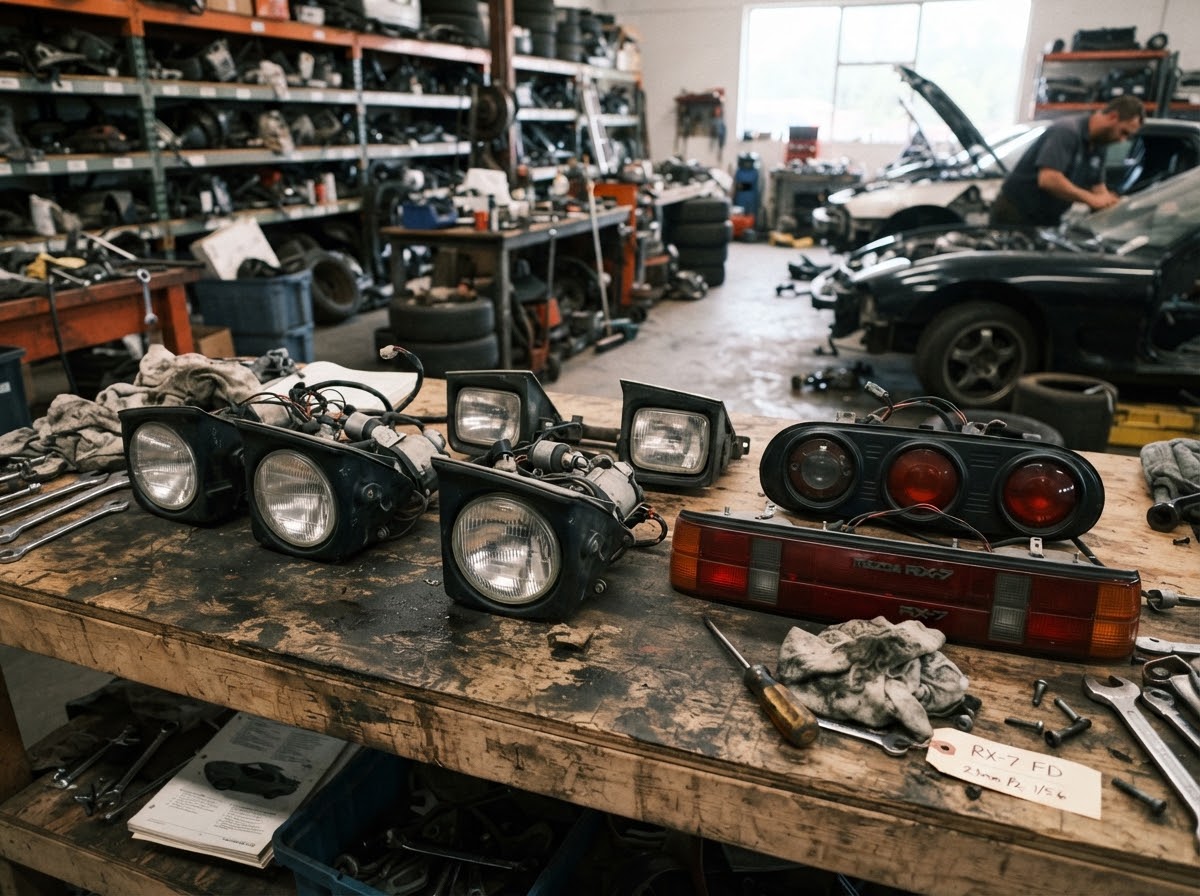
Every Mazda gearbox part that gets saved and reused is one less reason to scrap a car. That matters because the rotary Mazda fleet is not getting any younger. The RX-7 is approaching 40 years old for the earliest examples, and even the RX-8 is now old enough to vote. Parts availability will only get tighter. That is why I encourage owners to buy good used components when they see them, even if they do not need them immediately. Having a spare input shaft or a set of synchros on the shelf can turn a six-month downtime into a weekend job.
The mechanical sympathy that comes from understanding the gearbox also makes you a better driver and a better owner. You learn to double-clutch when the synchros are cold, to match revs on the downshift, and to avoid forcing the lever into gear. That kind of care extends the life of the transmission and makes every drive more satisfying. It is not just about keeping the car running. It is about enjoying it the way it was meant to be enjoyed.
Whether you are in Australia, the United States, or anywhere else, the principles are the same. Treat the gearbox with respect, use quality parts, and do not cut corners. The rotary engine will reward you with its unique character, but only if the gearbox is there to deliver that power to the road.